In the months following my last post on Emma, I have attempted to write numerous times, only to be thwarted by numerous setbacks: my laptop finally stopped recognizing the Internet, so I literally could not post; I became so absorbed in Jeffrey Eugenides’ The Marriage Plot that I completely abandoned my latest novel, Conrad’s Nostromo; I was suddenly packing to move from Eugene back to Blackfoot and had no time to sit down and write a thoughtful post; I was so busy studying Spanish and reveling in the delights of being home that I didn't have time to write... The list could go on, but underneath each of these reasons or excuses was the plain truth that I am, for once, at a loss for words and have been since the day that I signed on to temporarily move to Mexico.
At first I intended to write about how exciting this new change would be, and how deliciously relevant my book choice was--Nostromo is not only set in a Spanish speaking country and full of Spanish-speaking characters, but the title character is Italian. The novel itself blends South American history with Italian, peppering character dialogue with a curious mix of English, Spanish, and Italian. After signing with the HELP! Organization, this intersection of cultures in my life and in my book seemed serendipitous to say the least. Each time I sat down to write, though, words failed me and soon enough some excuse or distraction presented itself and off I went.
After I moved home, again I had ideas of filling my blog with pictures of home, of my sweet Carlee, of my new kitty friend Gracie, and all the beautiful elements that make my parents’ house such a wonderful escape. But again there were distractions--Carlee, Gracie, and all those elements of home that needed attention one last time before I left for Mexico. My blog languished as, again, the proper words seemed to fail me.
Now, however, I am in Mexico and my whole world is teeming with words. Instead of struggling over what to write, I am trying to figure out how to fit the adventures of each day into a readable post. I've been here less than a week and already I've made several new friends, tried more interesting dishes than ever before, and embarrassed myself on a regular basis and I'm loving it all. I've seen cockroaches (live and dead), carried on (small) conversations in Spanish with some of the locals, befriended a waiter at a bar and the owner and cook of a delicious taqueria, and I've learned how to efficiently brush my teeth with bottled water. Our apartment has been without power for over a day now, and our water stopped working this morning. As I write this, one roommate is doing crosswords by candlelight while another is washing up via waterbottles and a teacup. It seems like my companions and I have had an adventure dictated by Murphy’s Law thus far, but despite it all, I am nothing short of euphoric at the moment.
I could wax on longer over the amazing effects of this trip thus far, but suffice to say that this trip has been in no way what I expected, and for that I am grateful. And I hope that, as this trip continues, I continue to be surprised by myself and by Mexico.
Thursday, January 5, 2012

Thursday, October 13, 2011
Finishing Emma
I finally finished Emma and I have to say that in the end, despite my dubiousness and reluctance, she won me over, as she must have so many others. Her serious, honest, and rather unflinching reflection and personal reform reached me as her so-called charity and charms could not. And, I admit, like so many others, I have a decided soft-spot for Jane Austen’s leading men. Mr. Darcy is, of course, my favorite, but Mr. George Knightley runs a very close second (particularly if I envision him as he was portrayed by Jeremy Northam, though I am eager to see Jonny Lee Miller’s version of Mr. Knightley as he cut quite a fine figure as Edmund Bertram in the film version of Mansfield Park).
 |
| He's just swoon-worthy as the stern but affectionate (and oh- so-correct) Mr. Knightley... |
As I said in my earlier posts, I didn’t like Emma for the majority of the novel. This doesn’t mean, however, that I disliked the novel as a whole; in fact, the language was beautiful and Austen did an accurate job creating a small, rural community with its quirks and its charming characters. But I was overwhelmingly repelled by Emma herself, as Austen intended us to be. When she created Emma, Austen created a character that no one but she herself would truly like. I so disliked Emma as a character that I found it hard to invest myself entirely in the novel, unlike my experiences with previous novels. In the last quarter of the novel, though, Emma reforms. In a moment of childish insensitivity, she insults an old friend and, upon receiving harsh criticism from Mr. Knightley, examines her actions and attitudes and vows to change. After she reforms Emma becomes a likeable character. Her honest reflection forces her to admit her own shortcomings and petty actions and she begins to redeem herself.
Up to this point in the novel, I found myself preferring the various film adaptations of the story because Emma was more likeable and the story flowed better; after her reform, though, the entire novel gets better than any film adaptation. Emma finally moves beyond her petty jealousy of Jane Fairfax and the two form a friendship, a relationship upon which none of the adaptations elaborate. Jane Fairfax on the whole becomes a much better developed character on the page than she does as a living, breathing human being on screen. Furthermore, the reader gets a better explanation and justification of Frank Churchill’s actions than the films offer. Frank was a character whom, like Emma, I found it hard to like; ultimately, though, he drops his artifice to reveal his true character. By embracing his faults and seeking redemption from those he loves, Frank becomes a better man and a much more likeable character. I appreciated this effort by Austen, and I found the climax and denouement much more gratifying than the previous three-quarters of the novel.
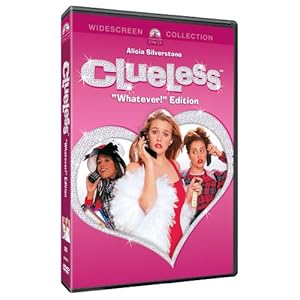 |
| I'd say I wonder what Emma would be like were she to live in the present, but I honestly think she would be something very close to Clueless' Cher |
While I appreciated the other characters and the caricatures of English society they represented, in the end I am most intrigued by Emma as a character. Throughout most of the novel, Emma’s one redeeming quality is her loyalty to those she loves, particularly her ever-suffering father. The unwavering attention to Mr. Woodhouse’s pains and worries would be a credit to any person, but particularly to the spoiled and self-centered Emma. Emma is so devoted to her father’s care that she decides herself against marriage because it would take her away from her father’s house and would cause him daily distress.
More than Emma’s loyalty to her father, though, I find her attitude towards her station in life fascinating. Unlike the Bennett sisters of Pride & Prejudice, Emma does not need to marry to secure her station in life. She flirts with the idea of falling in love with Frank Churchill, but it is more from a childish desire for romance and intrigue than a genuine desire for love and comfort in the future. Emma did not feel the same pressures that Austen’s other female characters would have encountered. This level of comfort, in fact, is what defines Emma is crucial aspects because it allows her to spend her days in relative ease and, because she did not paint or sing or play music particularly well, Emma constantly finds herself bored. She tries to compensate for this by involving herself with charity work, visiting the less fortunate families in the neighborhood, but charity work can only distract one so far. This boredom is what induces Emma to take an interest in Harriet Smith. Austen refers to this boredom offhand, referring to Emma’s moods being dictated by inclement weather and her restlessness at being cooped up inside, clearly not intending for this to be a dominant facet of the story. Emma would have been a much different character, though, had she been born in a different class or as part of a later generation. Had she been born to a lower class, Emma’s time would have been consumed with housekeeping, or working to better herself so that she could become a governess. Had she been born a few generations later, she could have become an educated Bluestocking or a suffragette or other reformer and doer of good deeds. But as she was born into the gentry during the reign of King George III, she was doomed to a life of constantly visiting the same few families and bestowing her attentions on those she deems worthy.
Tuesday, October 4, 2011
Letters to Home, Week Two
Day 5, Tuesday, September 27:
Finished The Game today. Am left with a strong desire to dress in a silken sari, drink chai tea, and eat red curry, butter chicken, and some garlic naan. Also feeling the need to read Kipling’s Kim now. Maybe after I finish my book project.
 |
| Fall colors are starting to appear in Eugene |
Day 7, Thursday, September 29:
My manager “introduced” me to “Into the Mystic.” I got the distinct impression that he thought I’d never heard of Van Morrison. It was so hilarious that I just let it slide while I giggled to myself. Spent my last half hour listening to a Van Morrison play list that I made, pretending that instead of sitting at my desk in the office, that I was stretched out in our old living room on that horrid green carpet, the sun shining through the windows, and Van playing over the stereo. The music made me feel almost as if I would open my eyes and see you come around the corner, mom with a cup of tea and Ralphie with some alternative (possibly rude) lyrics in mind.
Day 9, Saturday, October 1:
 |
| I had so much hair that we had to put it into two ponytails to cut it for donation |
Met Martha for brunch this morning. We went to a very Eugene café and had the most delightful Orange/Mango/Peach mimosas, I was rather tipsy after just one! Then we went down the street to the salon for my hair cut. We cut 10 ½ inches for donation, and after trimming and evening out the cut, my hair is just below chin length. It swishes when I shake my head, and is short enough for a shampoo Mohawk, which I love. It’s a pretty liberating cut, so far at least.
Day 10, Sunday, October 2:
Watched the Hollywood version of Emma last night. I was left with the following impressions:
- Jeremy Northam was born to play characters like Mr. Knightly. When I read Emma, I picture someone exactly like Northam, handsome but not devastatingly so (he’s not exactly Colin Firth/Mr. Darcy here), but elegant and a true gentleman with a stern look and a dashing air. Didn’t love Gwenyth Paltrow as Emma, I felt that Romola Garai was a much better Emma, but Jeremy Northam was perfect. Also, Toni Collette as Harriet Smith: Genius.
- I am right thus far with my impressions--Emma is much more likeable in the films than in the novel. In the film, we aren’t really privy to her every thought and judgment, as we are in the novel, and this leaves her as a much nicer and likeable character. Am hoping her personal growth in this last quarter of the novel leaves me with a better impression.
- As much as I love him, I absolutely detested Ewan McGregor as Frank Churchill, though I am unsure if this is because I so very much dislike Frank as a character or because McGregor’s wig was truly terrible.
Tuesday, September 27, 2011
Letters to Home, Week One
A note of explanation: Although I have lived away from home since I was seventeen and a freshman in college, I have rarely gone more than a few days without talking to my parents. Last week, for the first time since I was a child, they left for a vacation abroad. And, for the first time since I was a child, I am having separation anxiety issues. I have become so accustomed to passing on small tidbits of information and trivia or calling my mom to tell her the amusing anecdotes of my daily life that my parents were scarcely gone 24 hours and I was itching to dial their phone number. To ease my need to share absolutely everything with my parents, I have decided to keep a running list of musings directed to my parents (and since they make up half of my current following, I think it will be okay).
Day 1: Friday, September 23:
So I am listening to Laurie R. King’s The Game and just hating that you are unavailable to talk with. I am just loving this newest adventure! I love that the men in these novels never seem to understand that Mary Russell-Holmes is no ordinary female. When she whips out her throwing knife and tosses it across the room (to land perfectly in a foul painting) in order to prove her point to yet another doubting man, I was instantly transported from India to a small room in Palestine and the English Nesbit was traded for the enigmatic Mahmoud. Mary Russell (and more likely Laurie King herself) is wicked and I love it.
I really have to admire King’s ability to craft such real, believable characters. I have noted this before, primarily in Justice Hall--I loved the novel so much because I loved Mahmoud and Ali. They were real characters to me, real people, and I shared in each of their emotions. I love Russell best, though. Partly because she’s so clever and determined, and she has compassion, razor sharp wit, and gumption. She seems like the kind of person I would like. The scene in the small Indian shop where Sunny buys Russell the pretty amber necklace was so touching, as Mary analyzes the situation and regrets the duplicity her profession so often requires. These novels so often evoke a multitude of emotions--delight at the capers Russell gets into and the bickering conversations between Russell and Holmes, but also pain and sadness as the volatile world of the 1920s intrudes upon the fictional world of Sherlock Holmes. I appreciate that.
Still working my way through Emma. As I read, I can’t help but compare the novel to the various movie versions we’ve watched. In the movie versions, Emma is just so much more likeable. I know that in large part this is because in the movies we are not privy to Emma’s thoughts, which, in the novel, reveal the depths of Emma’s self-absorption and silliness. I think it is also due to the fact that the directors and screenwriters adapt the novel to make Emma more likeable so that audiences will warm to her quickly. We as readers have more time to acquaint ourselves with our heroine.
I’m also struck by how similar Emma and Mrs. Elton are. This is not something that comes through in the movies, but is very apparent in the novel. I’m amused that Mrs. Elton appears to be as meddlesome as Emma, though not as subtle or refined in her interfering. And the fact that Emma detests Mrs. Elton for their shared traits is just delightful. Delightful.
 |
| Tyler Fortier and band at a concert this last spring; his new CD "Bang On Time" will be amazing, trust me. |
Day 2: Saturday, September 24:
Got Ralphie’s note in the mail with the article on T.S. Eliot. Delighted to know that he remembered that pistachio flavored gelato is truly the best flavor. I am comforted to know that in a world where such flavors as hazelnut and artificial chocolates are out there to tempt the unsuspecting eater, Ralphie knows which flavor to choose.
Day 3: Sunday, September 25:
Amazing weekend. Friday was a Sherlock night, always enjoyable. And Saturday we watched the Ducks play Arizona (and win, naturally) and then went to Cornucopia to watch my friend Tyler play. It was great. The band played a few songs off his new album and they sounded amazing; I can’t wait to hear the full album soon! And near the end of the night, after everyone had enjoyed a couple of drinks, Tyler got whimsical and sang a few lines of the Spice Girls’ “Wannabe.” When I started singing along, he turned the microphone towards me and my friends and I sang the chorus with the band. Almost a dream-come-true moment, singing with the band. Was glowing with delight the rest of the evening and most of today.
Saturday, September 10, 2011
A Hope For Tomorrow
When I was fifteen I had a crisis of faith. I am not a highly religious person. I do not follow any organized religion, and while I believe in a higher power, I am fuzzy on the details. For as long as I can remember, though, I have maintained an almost religious faith in the republic forged by men like Thomas Jefferson, John Adams, and Benjamin Franklin. I love my country and the ideals upon which is was founded. I look with deep reverence to the Declaration of Independence and the Constitution. My heart thrills at words like “We hold these truths to be self evident, that all men are created equal…” and I feel great surges of pride to be included in the phrase “We the people….” I so revere the First Amendment that I have its 45 words seared into my memory and when I recite it, I can’t help but feel excitement build to a crescendo as I enumerate its freedoms.
In a country where the freedom of expression is permitted, promoted, and so highly regarded, though, dissent is also ever present, and at fifteen, I listened to those voices of dissent. It was easy to feel disillusion then; despite the numerous accomplishments of his regime, Bill Clinton left the presidency with a tarnished record, and the disastrous 2000 election placed a man in office whom I could not trust, let alone admire. My faith in American politics was shaken by current events; studying history did not help. I was studying American history my junior year, and was busy uncovering America’s shameful past. Those early weeks of American history revealed to me many of the horrors behind America’s colonial years--the abuses of Native Americans and the fact that this country was literally built with slave labor. Even Thomas Jefferson, my Jefferson, the author of those beautiful words in the Declaration, was not above the shame of our past. I was fifteen, on the cusp of sweet sixteen, and I was naïve, dramatic, and lost.
And then the world broke. I stood in the bathroom one morning, getting ready for school, and listened as a shocked radio DJ informed listeners that a plane had just crashed into the World Trade Center. The day that unfolded was a nightmare; each hour brought more news more terrible than before. Even ten years later I can recall with painful clarity my grief and fear on that terrible day. To borrow from Franklin Delano Roosevelt, September 11 was a date which will live in infamy, and I cannot describe the pain that even now remains strong. I believe it is unnecessary to describe my feelings, though, because the pain and the grief and fear I felt were shared by all.
The stories that have emerged from that day are heartbreaking, but they reveal the true beauty that lies in mankind. They are stories of profound loss, but also of true heroism and humanity. I grieved--and still grieve--for the loss of so many that day, but I cannot help feel pride in the men and women who revealed themselves to be heroes that day. To the rest of the country, the rescue workers and emergency responders who so valiantly worked to pull people from the towers became heroes of an almost epic proportion. But there were other heroes that day; the men and women who took to the streets with cups of water and sandwiches, blankets and kind words for the shocked and shaken survivors were heroic, too, as were the countless others who rushed to provide supplies, to donate blood, to offer any form of comfort possible. And one cannot forget the unimaginable bravery and self-sacrifice of the passengers of Flight 93. We found and lost so many heroes that day.
In the aftermath of 9/11, I saw the world pull together, united by a shared sense of sorrow and empathy. The attack was not an attack upon America, but a profound loss that shook the global community. For a brief moment it felt as though the world was not divided by nationalities or other social constructions and differences; instead, the world was one giant community that pulled together and grieved collectively. In the years since 2001, I have seen this occur at other moments of great loss--the 2004 tsunami that devastated Thailand, the earthquakes in Haiti and Japan--but for me, the aftermath of 9/11 holds the greatest significance. I am forever changed by what I witnessed, deeply moved by mankind’s display of strength, compassion, and hope.
September 11 cured me of my crisis of faith. Where the idols of Jefferson and Franklin once stood, I had a whole slew of American heroes. I maintain a wariness towards politicians (both past and present) that I may never lose, but I look at that as a good thing; to blindly believe in a hero or idol is dangerous and leads to zealotry. I still revel in American mythology, but I am careful to remember that it is, in fact, mythology.
Two months after the attacks I traveled to Washington, D.C., and saw for myself the still smoking Pentagon and the makeshift memorial citizens had erected. I had gone to D.C. with a group of strangers--students and teachers from around the country--and though we were friendly with one another, we were a group of individuals. As I stood looking at the Pentagon, so overcome with emotion that I felt ready to collapse, I heard a companion start to sing “God Bless America.” He drew our party together and we stood, arms around another to offer comfort, companionship, and strength and we sang and cried. When we left the memorial, we were no longer individuals but a small community banded together by our shared experience.
That day, like 9/11, changed me. I had never felt great emotion when I hear the national anthem or other patriotic songs, but, days later as I sat through a Veterans’ Day assembly, I was overcome as I listened to my school sing “The Star Spangled Banner.” I couldn’t help but cry, unphased by the stares and whispers of my neighbors. I still cry every time I hear a large group of people sing the national anthem. I return to the 9/11 memorial and that beautiful moment of unity I felt as I stood with my companions. I hope I never forget that feeling.
The September 11 attacks changed me in another way. I am Hispanic-American, and growing up I took great pride in this. I am proud of my heritage and I celebrate my ethnicity. As a child, though, I took pains to always differentiate myself; I took pride in identifying myself as Bolivian-American or Hispanic-American. In the aftermath of 9/11, though, many people like me of mixed backgrounds dropped their hyphens. On September 11, 2001, I, like so many others, ceased to be Hispanic-American or Bolivian-American and became simply, proudly American. For a moment, we were all united as one nation, no longer divided by our ethnic or racial backgrounds. For too brief a time, we became the country Martin Luther King dreamed of. This of course has faded, and America is again a country with hyphenated citizens. As we prepare for tomorrow, though, I cannot help but hope that we can all remember that feeling of unity. My hope is that tomorrow, we will not experience feelings of hate or revenge, but instead that we will celebrate the good in humanity that we saw emerge so clearly on 9/11. This country was founded upon the ideal that all men and women are created equal, and I hope that tomorrow, we all remember that ideal. I pray that we can all come together again as a single community, forgetting our cultural, ethnic, and religious differences. I hope that tomorrow finds us as one nation, indivisible, with compassion and love for all.
In a country where the freedom of expression is permitted, promoted, and so highly regarded, though, dissent is also ever present, and at fifteen, I listened to those voices of dissent. It was easy to feel disillusion then; despite the numerous accomplishments of his regime, Bill Clinton left the presidency with a tarnished record, and the disastrous 2000 election placed a man in office whom I could not trust, let alone admire. My faith in American politics was shaken by current events; studying history did not help. I was studying American history my junior year, and was busy uncovering America’s shameful past. Those early weeks of American history revealed to me many of the horrors behind America’s colonial years--the abuses of Native Americans and the fact that this country was literally built with slave labor. Even Thomas Jefferson, my Jefferson, the author of those beautiful words in the Declaration, was not above the shame of our past. I was fifteen, on the cusp of sweet sixteen, and I was naïve, dramatic, and lost.
And then the world broke. I stood in the bathroom one morning, getting ready for school, and listened as a shocked radio DJ informed listeners that a plane had just crashed into the World Trade Center. The day that unfolded was a nightmare; each hour brought more news more terrible than before. Even ten years later I can recall with painful clarity my grief and fear on that terrible day. To borrow from Franklin Delano Roosevelt, September 11 was a date which will live in infamy, and I cannot describe the pain that even now remains strong. I believe it is unnecessary to describe my feelings, though, because the pain and the grief and fear I felt were shared by all.
The stories that have emerged from that day are heartbreaking, but they reveal the true beauty that lies in mankind. They are stories of profound loss, but also of true heroism and humanity. I grieved--and still grieve--for the loss of so many that day, but I cannot help feel pride in the men and women who revealed themselves to be heroes that day. To the rest of the country, the rescue workers and emergency responders who so valiantly worked to pull people from the towers became heroes of an almost epic proportion. But there were other heroes that day; the men and women who took to the streets with cups of water and sandwiches, blankets and kind words for the shocked and shaken survivors were heroic, too, as were the countless others who rushed to provide supplies, to donate blood, to offer any form of comfort possible. And one cannot forget the unimaginable bravery and self-sacrifice of the passengers of Flight 93. We found and lost so many heroes that day.
In the aftermath of 9/11, I saw the world pull together, united by a shared sense of sorrow and empathy. The attack was not an attack upon America, but a profound loss that shook the global community. For a brief moment it felt as though the world was not divided by nationalities or other social constructions and differences; instead, the world was one giant community that pulled together and grieved collectively. In the years since 2001, I have seen this occur at other moments of great loss--the 2004 tsunami that devastated Thailand, the earthquakes in Haiti and Japan--but for me, the aftermath of 9/11 holds the greatest significance. I am forever changed by what I witnessed, deeply moved by mankind’s display of strength, compassion, and hope.
September 11 cured me of my crisis of faith. Where the idols of Jefferson and Franklin once stood, I had a whole slew of American heroes. I maintain a wariness towards politicians (both past and present) that I may never lose, but I look at that as a good thing; to blindly believe in a hero or idol is dangerous and leads to zealotry. I still revel in American mythology, but I am careful to remember that it is, in fact, mythology.
Two months after the attacks I traveled to Washington, D.C., and saw for myself the still smoking Pentagon and the makeshift memorial citizens had erected. I had gone to D.C. with a group of strangers--students and teachers from around the country--and though we were friendly with one another, we were a group of individuals. As I stood looking at the Pentagon, so overcome with emotion that I felt ready to collapse, I heard a companion start to sing “God Bless America.” He drew our party together and we stood, arms around another to offer comfort, companionship, and strength and we sang and cried. When we left the memorial, we were no longer individuals but a small community banded together by our shared experience.
That day, like 9/11, changed me. I had never felt great emotion when I hear the national anthem or other patriotic songs, but, days later as I sat through a Veterans’ Day assembly, I was overcome as I listened to my school sing “The Star Spangled Banner.” I couldn’t help but cry, unphased by the stares and whispers of my neighbors. I still cry every time I hear a large group of people sing the national anthem. I return to the 9/11 memorial and that beautiful moment of unity I felt as I stood with my companions. I hope I never forget that feeling.
The September 11 attacks changed me in another way. I am Hispanic-American, and growing up I took great pride in this. I am proud of my heritage and I celebrate my ethnicity. As a child, though, I took pains to always differentiate myself; I took pride in identifying myself as Bolivian-American or Hispanic-American. In the aftermath of 9/11, though, many people like me of mixed backgrounds dropped their hyphens. On September 11, 2001, I, like so many others, ceased to be Hispanic-American or Bolivian-American and became simply, proudly American. For a moment, we were all united as one nation, no longer divided by our ethnic or racial backgrounds. For too brief a time, we became the country Martin Luther King dreamed of. This of course has faded, and America is again a country with hyphenated citizens. As we prepare for tomorrow, though, I cannot help but hope that we can all remember that feeling of unity. My hope is that tomorrow, we will not experience feelings of hate or revenge, but instead that we will celebrate the good in humanity that we saw emerge so clearly on 9/11. This country was founded upon the ideal that all men and women are created equal, and I hope that tomorrow, we all remember that ideal. I pray that we can all come together again as a single community, forgetting our cultural, ethnic, and religious differences. I hope that tomorrow finds us as one nation, indivisible, with compassion and love for all.
Tuesday, August 30, 2011
August Novels
Growing up I watched my father juggle several books at a time. He didn’t literally juggle, though that would have been impressive, but he would regularly shift through multiple books at one time. As a child I questioned this--why move back and forth between books? Wouldn’t it be easier (and preferable) to start and finish one book and then move on to the next? I have always preferred to do things one at a time: I eat my foods one at a time, rarely mixing my foods (mixing horrifies me), I prefer to do move through a list of tasks, completing one before moving to the next, and I only read one book at a time.
There is a common belief that we turn into our parents and over the years I have watched with mixed amusement and chagrin as I slowly began to prefer my parents’ taste in music, their taste in film, and my opinions softened towards the family business. Most recently, however, I have discovered that in addition to using any nearby odd scraps of paper or coaster as a makeshift bookmark (a trait of my father’s that I mocked for years), I also find myself juggling novels.
This is, in part, a consequence of my several years as a student. During school it was often necessary that I simultaneously read two or three books, so it is natural that I became accustomed to the practice. I am more inclined, however, to blame this (as is the wont of my generation) on my parents. Juggling books is as much ingrained in my nature as my preference for tea, the French impressionists, and Van Morrison. I suppose it’s only time before I wander the house in long underwear making up rude alternative lyrics to popular songs.
The books I am currently juggling are:
- Going Solo, by Roald Dahl
- Emma, by Jane Austen
- Justice Hall, by Laurie R. King
*As a side note, one of the primary reasons I chose this particular list was the presence of Dahl’s The BFG. To me, this signaled an open mind and a willingness to look beyond lofty tomes by classical authors in an effort to identify truly great novels, whatever their target audience.
 |
| My current pile of reading material, and requisite cup of tea |
I started reading Emma immediately after finishing The Pursuit of Love. I have not read Emma, but in my life I have encountered three or four film versions of the novel, including the very loose interpretation, Clueless. I am quite familiar with the story of the meddlesome but well intentioned Emma Woodhouse and her journey towards maturity and happiness. Thus far I have not encountered any aspects of the plot that are new or unknown to me, but I am surprised to discover that Ms. Woodhouse is much less likeable on paper. In the various film versions, Emma has always appeared opinionated and interfering, but well meaning. As a viewer I was always willing to forgive her these faults because she was young, because she felt genuine remorse when her meddling went awry, and because she appeared repentant and wiser in the end. As a reader, though, I feel less willingness to forgive. Admittedly, I have not finished the novel and Emma has not yet fully matured, so I should delay my judgment. Nevertheless, I find it difficult to like Emma when she unabashedly destroyed the happiness of a simple farmer and then her friend Harriet, and after acknowledging the unfortunate consequences of her meddling, is unable to change her ways.
Despite this, though, I am enjoying Emma. Austen successfully created a small community of real and believable characters. I am amused by the dynamics within this rural parish. Mr. Woodhouse and Emma’s older sister are charmingly neurotic, with their passion for gruel and almost hypochondriac concern for health. Their conversations frequently stray towards inane as they revert to citing their individual physicians and those physicians’ differing opinions on how to best promote wellbeing. I am also quite interested in the ways in which the various characters treat Emma. In many ways Emma is the queen bee in her little society. The majority of characters treat her with respect and deference; her father and former governess indulge her while the neighbors are nearly awed by Emma’s presence. The only character who treats Emma as a regular person is the upstanding, respectable and (in my mind at least) handsome Mr. Knightly, and thus far Emma has been quick to dismiss his opinions and warnings.
I’m about a third of the way through the novel, and a new plot twist is about to arrive, so I look with as much anticipation as the young Ms. Woodhouse to the formal arrival of the enigmatic Frank Churchill.
 |
| I like to read small passages to my plants to encourage them to grow full and strong; they like it |
The final novel that I’m working on is one in a popular series by Laurie R. King. To be entirely honest, I am not reading Justice Hall, instead I am listening to it. My daily commute requires me to be in the car for about an hour every day, and because my radio is spotty at best, I have turned to audio books on my iPod for entertainment. I was first introduced to Laurie King’s Mary Russell as a college freshman. I was taking a course dedicated to the evolution of mystery novels and the final book in the syllabus was The Beekeeper’s Apprentice, a charming story about young Mary Russell who, orphaned and relocated to rural England, encounters a retired Sherlock Holmes and becomes his informal apprentice. King has ten novels in the Mary Russell series, and I am completely engrossed in the sixth novel, Justice Hall.
Although the Mary Russell novels are mysteries, the stories often revolve more around characters and interactions than around the mystery Russell and Holmes work to solve. In Justice Hall, and its companion novel O Jerusalem, the mystery is decidedly secondary to the character development and interactions. In these two novels King crafts beautiful, dynamic characters with depth and feeling. I frequently develop emotional attachments to literary characters, but I find myself particularly invested here. I feel pain when the characters experience anguish, and have openly wept over their various trials and triumphs.
In addition to writing wonderful characters, King beautifully interweaves history with her fiction. Because of her subject, intense research was necessary from the outset. To write a novel involving the world’s most beloved detective, King had to extensively study Sir Arthur Conan Doyle’s stories. King mastered Holmes’ mannerisms, his patterns of speech, and his very being. I have read almost all the stories within the Sherlock Holmes canon, and I grew up watching various actors portray the enigmatic detective on screen, so I feel as though I know Holmes quite well, and King’s interpretation of Holmes is incredibly faithful to the original. After creating the characters of Russell and Holmes, King pushed her research further to embed them in realistic scenarios. King places her characters in the post-Great War era, accurately portraying the various hardships the “lost generation” endured in the years following the war. Her descriptions of trench warfare and the veterans’ attitudes towards the Home Front are striking and accurate to my historian’s eye. It is clear that she has put much research into making her stories as honest and real as possible, and I often feel as though I’m getting a miniature lesson in cultural history as I listen to her stories.
Justice Hall revolves around a young soldier’s death in the final months of the Great War. As Russell and Holmes work to discover the truth, they are forced to relive the soldier’s time in the trenches. The fighting in France and trench warfare in particular was so terrible, so brutally destructive that many fervently hoped that war would never again occur. The young men at the front were forced to endure freezing cold nights of sleeplessness due to constant shelling or the endless attacks of fleas and lice; they stood for weeks on end in swampy water, unable to adequately dry their feet; and these young men (often mere boys who had lied about their ages to enlist) lived in constant fear of shelling, poisonous gasses, snipers, and receiving a command from a detached superior who, far from the frontlines himself, demanded that the company cross No Man’s Land in a fruitless mission that would only cost more lives. War is hell, and King so perfectly describes this version of hell that it has frequently brought tears to my eyes. Much of my time as a scholar was spent during the Great War era, so this novel is particularly poignant for me. I appreciate her attention to detail and her obvious research more and more with each chapter.
Monday, August 1, 2011
The Pursuit of Love (and Something Greater)
Having just finished Nancy Mitford’s The Pursuit of Love, I must confess that, once again, I have been thoroughly charmed by the Brits. To be more exact, I should say that I have been won over by a well written story with equal parts wit and wicked humor. As with the last two novels I’ve read, the narration style, the characters, and the ever-present humor were all entirely, blissfully British to the very core.
The early chapters, which illustrate the more humorous aspects of childhood and growing up, are delightful. These chapters describe Linda Radlett and her colorful family, adventures at the family home, Alconleigh, and small stories of growing up in pastoral England. I was particularly amused by the annual “child hunt,” a family tradition at Alconleigh where two or three children, selected by their father, set out across the family property, running wildly to create a trail for the hounds to follow. Some time later their father would set out with his pack of well-trained, friendly hounds to track the children. The “hunt” ended when the hounds caught up to the children and set about licking faces and receiving well-earned doggie treats. The neighbors and friends thought this tradition barbaric (and indeed, it does sound…odd to say the least), but, I, like the Radlett children, thought it delightful and ingenious.
As the title suggests, the main story arc follows Linda as she searches for true love. Besides describing “child hunts” and other similarly outrageous stories, the early chapters detail Linda’s obsession with love. This obsession led her to marry the first man who charmed her; determined to find love, Linda convinced herself that she loved an utterly boring Tory named Tony. Some time later, still a true believer in love, Linda left Tony to marry Christian the Communist. Christian, too, proved a disappointment, and, alone at a train station in Paris, Linda finally met Fabrice. She quickly became enthralled with Fabrice, experiencing real love and romance for the first time. These are the chapters that ultimately won me over. For the first time in the novel, Linda committed herself to something, throwing herself entirely into her new life with Fabrice. She seemed to finally take interest in life and in love, giving the story greater weight and importance. I invested myself in the story because Linda finally invested herself in her own story.
Although the story revolves around Linda and her quest to find happiness, I didn’t find her an entirely likeable character. The narrator, her cousin Fanny grew up close to Linda, and the love Fanny felt for Linda makes Fanny a less-than-reliable narrator. Where an objective observer would see a foolish, shallow, and self-centered (but certainly well-meaning) young woman, Fanny was more charitable, forgiving Linda her faults and shortcomings and, in general, portraying Linda in a favorable light. Like Fanny, most characters in the novel instantly adored Linda, won over by her charm. It took me most of the novel, though, to find myself truly invested in Linda’s story. After Linda’s failed attempts at love, her absolute joy and happiness with Fabrice charmed me where her silliness and amiable nature couldn’t. In spite of myself, I was so intrigued in Linda’s story that I was tempted to skip to the end to discover whether or not Linda found a happy ending.
As I said in my introduction, I have been charmed by the Brits. This time it was Mitford’s quirky British humor that so appealed to me, as well as the fascinating clash of old attitudes and new, the Victorian versus Edwardian. This was most notable in the various characters’ responses towards relationships. On the one hand, most of the characters were appalled when Linda left her first husband, Tony; Linda’s parents stoutly refused to recognize Linda’s subsequent divorce and marriage to Christian. No one looked harshly on Fanny’s mother, though, for repeatedly leaving her husbands for her next fling. Though they called her “the Bolter,” the nickname was given with affection and everyone treated the Bolter with the same bemusement they would a mischievous child. This coexistence of attitudes, this social hypocrisy, could have been present in America and American literature as well (and I’m sure that a perusal of twentieth century lit would reveal several instances), but the flair with which this story is presented is, to me at least, inherently, beautifully British.
I was also deeply touched by a small exchange between Linda, Fanny, and their uncle Davey. The three, huddled together, discuss the Great War and the resumption of war in Europe. Linda laments belonging to a “lost generation,” convinced that history would count the two wars as one, discounting entirely the inter-war years. Davey contends that the era may not be entirely forgotten; instead, it will be portrayed as a “literary curiosity” as future generations become interested in the fashions and furniture of the 1920s and ‘30s. The exchange is brief, taking up only a couple of paragraphs before slipping back into a lighter tone, but it’s striking nonetheless. The discussion is notable in part because it is one of the few times that Linda adopts a serious tone. More importantly, though, writing in 1944 or 1945, Nancy Mitford would not know how history or society would view the Lost Generation. Nor did she know how the inter-war period would be portrayed, and yet she displays brief but keen insight. Knowing how both the novel and the war resolve, this moment is memorable and touching.
I admitted in my last post that I can be rather pretentious at times. I can now admit that, while I undertook this project in an effort to find some unknown element that my life is lacking, I have another motive. I want to be one of those elevated figures who can wax on about the literary strengths and weaknesses of Dickens or Dostoyevsky, et al. My heavy bookshelves would somehow enrich my life. Thus far it has. I have developed a better appreciation for the world of spy novels, having encountered two of its great foundations, and I have discovered several new points of interest for the historian and scholar in me. More than that, though, I have found books that truly delight me. I expected to like The Way We Live Now because I enjoyed the Masterpiece Theater production. Being already acquainted with the characters and plot, I could focus on the various storylines and better appreciate Trollope’s themes and his critique of British society. Novels like The Riddle of the Sands and The Pursuit of Love, however, were completely new to me. Had I not undertaken this endeavor, I’m afraid I probably would have remained ignorant of their existence. So while I look forward to reencountering old favorites like To Kill a Mockingbird or The BFG, and finally reading novels like Emma, I am also eager to discover more literary gems as I continue this project.
 |
| Cool house I found in Portland that looked vaguely Victorian so I included it...and it's my blog, so I can! |
As the title suggests, the main story arc follows Linda as she searches for true love. Besides describing “child hunts” and other similarly outrageous stories, the early chapters detail Linda’s obsession with love. This obsession led her to marry the first man who charmed her; determined to find love, Linda convinced herself that she loved an utterly boring Tory named Tony. Some time later, still a true believer in love, Linda left Tony to marry Christian the Communist. Christian, too, proved a disappointment, and, alone at a train station in Paris, Linda finally met Fabrice. She quickly became enthralled with Fabrice, experiencing real love and romance for the first time. These are the chapters that ultimately won me over. For the first time in the novel, Linda committed herself to something, throwing herself entirely into her new life with Fabrice. She seemed to finally take interest in life and in love, giving the story greater weight and importance. I invested myself in the story because Linda finally invested herself in her own story.
Although the story revolves around Linda and her quest to find happiness, I didn’t find her an entirely likeable character. The narrator, her cousin Fanny grew up close to Linda, and the love Fanny felt for Linda makes Fanny a less-than-reliable narrator. Where an objective observer would see a foolish, shallow, and self-centered (but certainly well-meaning) young woman, Fanny was more charitable, forgiving Linda her faults and shortcomings and, in general, portraying Linda in a favorable light. Like Fanny, most characters in the novel instantly adored Linda, won over by her charm. It took me most of the novel, though, to find myself truly invested in Linda’s story. After Linda’s failed attempts at love, her absolute joy and happiness with Fabrice charmed me where her silliness and amiable nature couldn’t. In spite of myself, I was so intrigued in Linda’s story that I was tempted to skip to the end to discover whether or not Linda found a happy ending.
 |
| This horse has absolutely no relation to any- thing, but it's inherently beautiful (like the novel) and I like pictures in my blog. Deal. |
I was also deeply touched by a small exchange between Linda, Fanny, and their uncle Davey. The three, huddled together, discuss the Great War and the resumption of war in Europe. Linda laments belonging to a “lost generation,” convinced that history would count the two wars as one, discounting entirely the inter-war years. Davey contends that the era may not be entirely forgotten; instead, it will be portrayed as a “literary curiosity” as future generations become interested in the fashions and furniture of the 1920s and ‘30s. The exchange is brief, taking up only a couple of paragraphs before slipping back into a lighter tone, but it’s striking nonetheless. The discussion is notable in part because it is one of the few times that Linda adopts a serious tone. More importantly, though, writing in 1944 or 1945, Nancy Mitford would not know how history or society would view the Lost Generation. Nor did she know how the inter-war period would be portrayed, and yet she displays brief but keen insight. Knowing how both the novel and the war resolve, this moment is memorable and touching.
I admitted in my last post that I can be rather pretentious at times. I can now admit that, while I undertook this project in an effort to find some unknown element that my life is lacking, I have another motive. I want to be one of those elevated figures who can wax on about the literary strengths and weaknesses of Dickens or Dostoyevsky, et al. My heavy bookshelves would somehow enrich my life. Thus far it has. I have developed a better appreciation for the world of spy novels, having encountered two of its great foundations, and I have discovered several new points of interest for the historian and scholar in me. More than that, though, I have found books that truly delight me. I expected to like The Way We Live Now because I enjoyed the Masterpiece Theater production. Being already acquainted with the characters and plot, I could focus on the various storylines and better appreciate Trollope’s themes and his critique of British society. Novels like The Riddle of the Sands and The Pursuit of Love, however, were completely new to me. Had I not undertaken this endeavor, I’m afraid I probably would have remained ignorant of their existence. So while I look forward to reencountering old favorites like To Kill a Mockingbird or The BFG, and finally reading novels like Emma, I am also eager to discover more literary gems as I continue this project.
Subscribe to:
Posts (Atom)